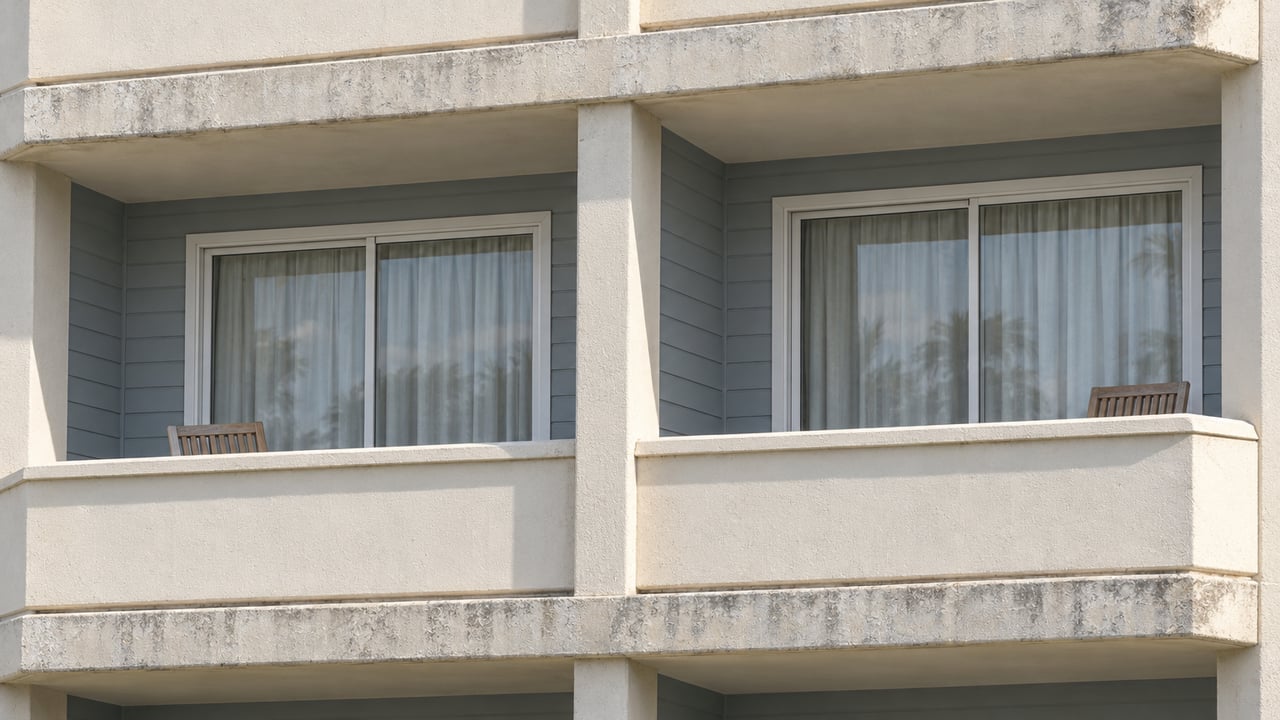
Why the Lowest Condo Fee in Ocean City May Not Stay That Way
When you compare two resale condos in Ocean City, the monthly fee looks like the most solid number in the listing. In many older buildings, it isn't. Since 2022, Maryland law has required a condominium's annual budget to fund whatever its most recent reserve study recommends. Associations that had just finished their first study were given several years to work up to that level. A building's fee today can sit well below where the law says it has to end up.
So a low fee often means the building is early on that schedule. The good news for a buyer is that Maryland requires the document that shows the schedule to reach you before closing, and you have a short window to act on it.
Under Section 11-135 of Maryland's Real Property Article, a resale contract for a unit in a condominium of seven or more units is not enforceable unless the seller provides the declaration, bylaws, rules and a certificate from the association no later than 15 days before closing. Once the buyer has received all of it, they have seven days to cancel in writing without giving a reason. That right ends at closing.
The certificate covers the items most closely tied to future fees:
The statute requires disclosure of adopted special assessments that are unpaid and due from the seller, and of approved capital expenditures. It does not require a general list of assessments the board is only discussing. The reserve study fills much of that gap, because it lays out what the building expects to spend and when. To read it well, you need to know the formula the association is working under.
Maryland's reserve-study requirement started with HB 107, which took effect October 1, 2022. Under Section 11-109.4, a study has to list the common elements the association is responsible for, including structural, mechanical, electrical and plumbing components. It also has to estimate each component's remaining useful life and replacement cost, and the annual funding needed to cover them. Older condominiums outside Prince George's and Montgomery counties that had no study dated October 1, 2018 or later had to get one by October 1, 2023, and update it at least every five years after that.
In 2025 the legislature adjusted the rules through HB 292, Chapter 519, and its cross-filed Senate bill, effective October 1, 2025. The current budget provision, Section 11-109.2, sets out a schedule that a buyer can map a building onto:
| Where a building stands | What the statute says | What it suggests about the fee |
|---|---|---|
| Most recent study is an update | Budget reserves must equal the study's recommended amount, deposited by fiscal year-end | Fee should already reflect the full reserve contribution |
| Most recent study is the first one | Board must reach the recommended annual level within 5 fiscal years after the study year | Fee may still be climbing toward that level |
| Board declares financial hardship | A two-thirds board vote allows a reasonable deviation for one fiscal year, renewable by another two-thirds vote | Fee may stay below the target, but must still cover safety, structural and essential-system priorities |
| Study update due | A new study is required at least every five years | The target itself can change |
The hardship row leaves a paper trail. Boards that use it have to document their good-faith efforts to resume full funding, and Section 11-109.2 makes those documents association records open to examination and copying under Section 11-116. Owners must also get reasonable notice before the vote, which has to take place at a regular or special meeting.
Picture two buildings on the same block with similar fees. One updated its study years ago and is fully funded. The other finished its first study recently, has years of increases left in its ramp, and may have voted a hardship deviation. They have the same fee for very different reasons.
Ocean City has many older, self-governing condominium buildings, which is part of why the five-year window exists. The Delmarva Community Managers Association was founded in 1976 by the managers of three Ocean City high-rises, High Point South, the Pyramid and the Irene. According to OC Today-Dispatch, it grew along with the resort's condo boom of the 1980s and 1990s.
In February 2025, OC Today-Dispatch reported that Del. Wayne Hartman, who represents Worcester County, was sponsoring a bill for the second year to lengthen the window for reaching reserve funding levels. DCMA president Michele Nadeau told the paper the original three years was too short. "It's almost impossible for people who haven't had a reserve study in 30 years to say they now need a million dollars and there's only 16 condos. I think five years is a realistic figure," she said. The same article said older and smaller buildings were hit hardest. Before 2022, many had never done a reserve study and instead charged owners a special assessment when something needed replacing.
The five-year figure became law. Hartman is listed as a sponsor of HB 292, the 2025 bill that set the current five-fiscal-year ramp. The same OC Today-Dispatch report noted that even where condo documents cap how far fees can rise, the law lets boards raise assessments to cover the required reserve funding. A fee cap in a building's documents may not limit increases the way a buyer would assume.
Reserves are only one pressure on these budgets. In a separate OC Today-Dispatch story from February 2025, a veteran Ocean City property manager said one account had just received a 52% insurance increase. Hartman described owners as "getting hit with three increasing expenses, and substantially: the condo fee, the insurance, and the property taxes."
Buildings large enough to fall under Maryland's Building Energy Performance Standards have another schedule to meet. The regulations cover multifamily buildings of 35,000 gross square feet or more. Condominium buildings that reach that size under one board are included, and the association can be the responsible owner. Benchmarking reports are due to the Maryland Department of the Environment every June 1, covering the previous calendar year. For multifamily buildings, the direct-emissions limit is 0.82 kilograms of CO2e per square foot for 2030 through 2034, then 0.41 for 2035 through 2039, and zero from 2040 on.
The 2025 law HB 49, Chapter 844 kept that framework in place. It also bars the state from collecting alternative-compliance fees or performance-standard penalties until 2032, although penalties for failing to report still apply. MDE says it intends to adopt energy-use-intensity targets in 2027.
In practical terms, this means mechanical equipment. Nadeau also manages the Gateway Grand, and she told OC Today-Dispatch that converting the building's gas-run boilers to electric would make the costs "astronomical." She added that some major components can take as long as 14 months to arrive. Equipment with long lead times, emissions limits that start in 2030, and a reserve study that has to list mechanical components all point toward the same future budget lines.
All of this comes together during the seven-day review window. A few questions get to the useful information quickly:
Did the 2026 legislature change the resale disclosure rules? HB 1132 proposed new notice requirements and fee changes. Its bill page shows its last action as passing second reading in the Senate on April 13, 2026, and no chapter number is listed. The current statute text of Section 11-135 does not include those proposed changes.
Who prepares the reserve study? The statute requires a qualified preparer with relevant experience, a licensed architect or engineer, or a recognized reserve specialist. Boards must make the study available to owners and review it each year when preparing the budget.
Does the reserve law set a separate balcony inspection schedule? The reserve-study provisions require structural components to be included and make structural integrity a funding priority. They do not set a separate recurring balcony inspection interval.
This post is general information, not legal, tax or financial advice. Please confirm how these rules apply to a specific unit with an attorney or another qualified professional.
If you're weighing condos in Ocean City and want help reading a resale certificate within its seven-day window, Mechelle Nichols can go through the reserve study, the budget and the building's timeline with you before you commit. Let's Connect.


Our unique staging process maximizes the appeal and marketability of your property.